Chrome Extension
The Timesheet extension puts your timer in a side panel next to the page you work on. It also adds a timer button to GitHub, Jira, Trello, GitLab and more than 140 other web apps, so you can start tracking right from an issue or ticket. Everything you track is saved to your Timesheet account.

The extension requires a Pro, Business, or Enterprise plan, or an active trial. Every new Timesheet account starts with a 30-day trial. See the Plans page for the full comparison.
Install the extension
- Open the extension in the Chrome Web Store.
- Click Add to Chrome and confirm with Add extension.
- Pin the extension: click the puzzle icon in the Chrome toolbar, then the pin next to Timesheet.
Sign in
- Click the Timesheet icon in the toolbar. The side panel opens.
- Click Login. A window opens where you sign in to Timesheet or create an account.
- Confirm the access. The side panel now shows your timer.
The side panel
Click the Timesheet icon in the toolbar to open the side panel. It stays open while you switch tabs. To close it, click × in its header.
The header shows who is signed in. The icon with the arrow opens the Timesheet web app, and the gear icon opens the settings.
Start the timer
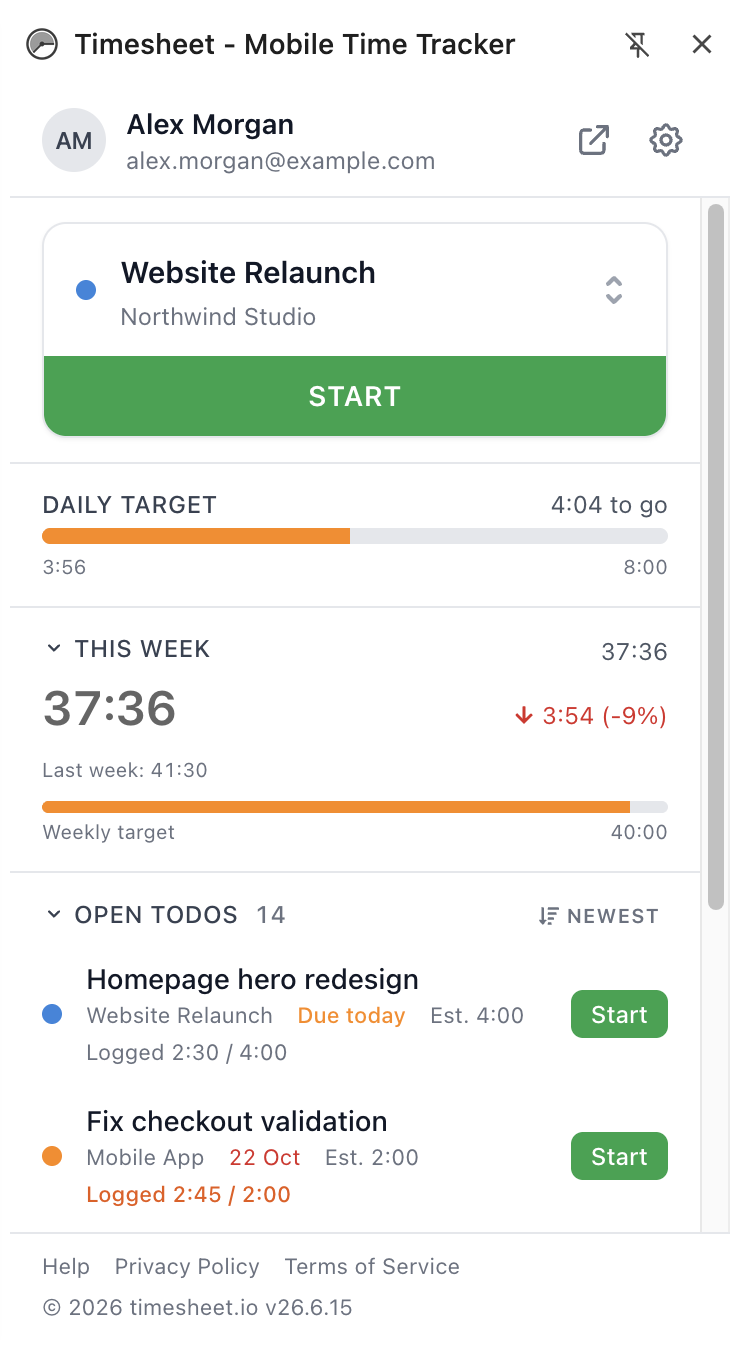
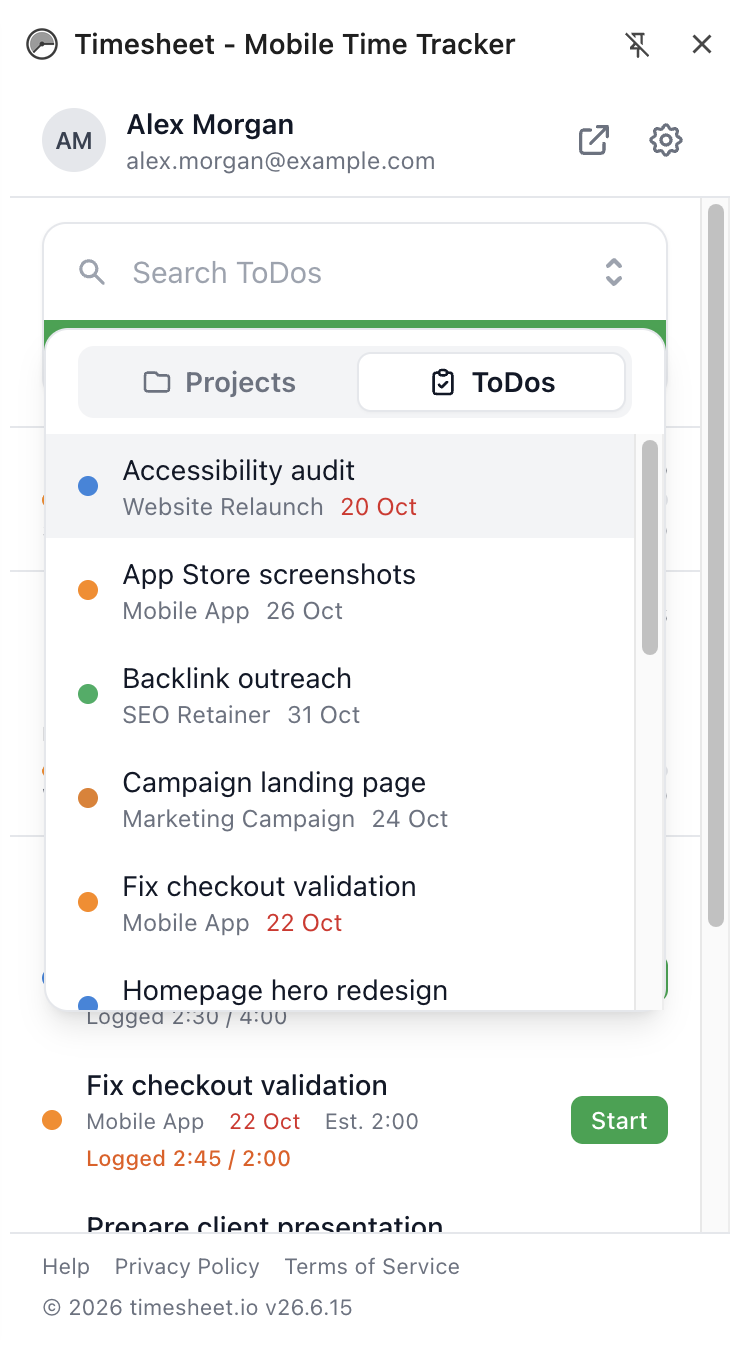
- Click the project field at the top of the timer.
- Choose a project on the Projects tab, or a ToDo on the ToDos tab. Type to search. Press Tab to switch between the tabs.
- Click Start.
A ToDo starts the timer on its project and links the time to the ToDo. Long lists load as you scroll.
While the timer runs
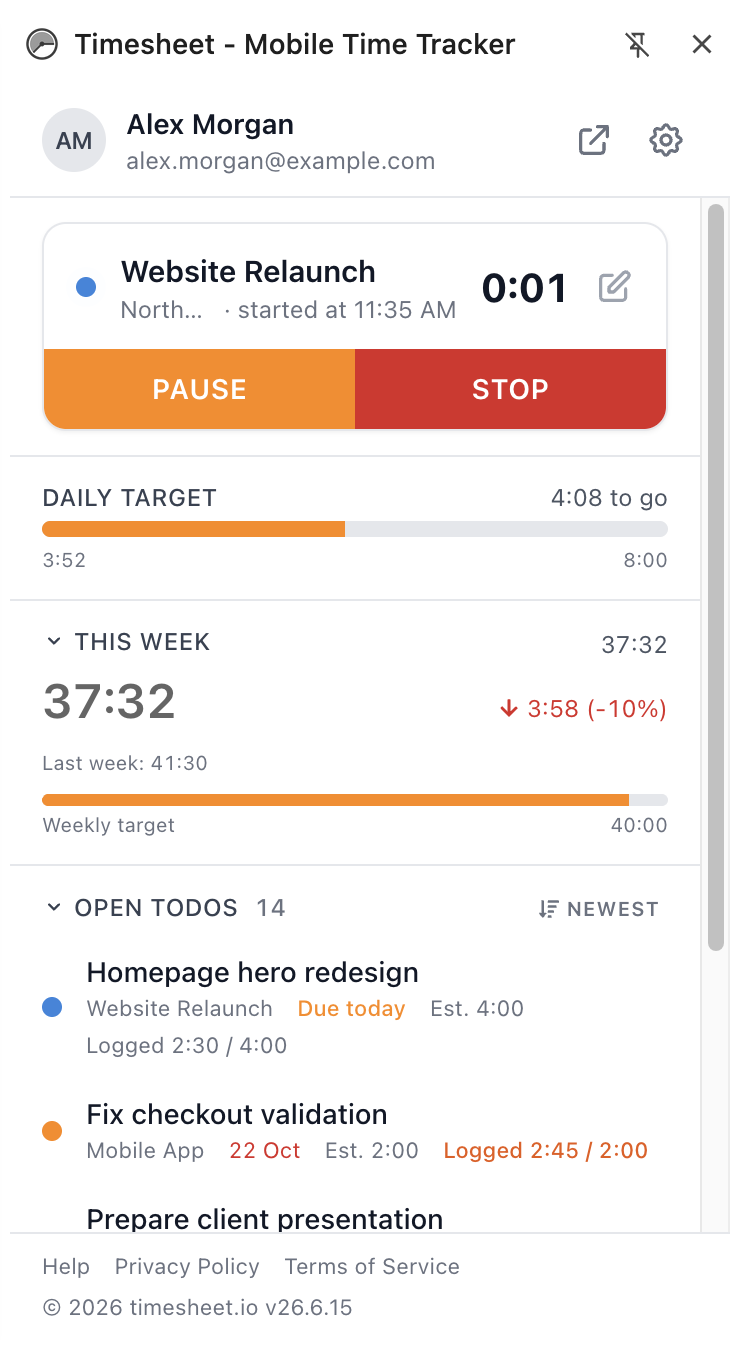
What you see:
- The project, and the ToDo or the client.
- When the timer started.
- The time so far, in the duration format of your account settings.
- Pause and Stop.
The Timesheet icon in the toolbar changes color while a timer runs.
How to use it:
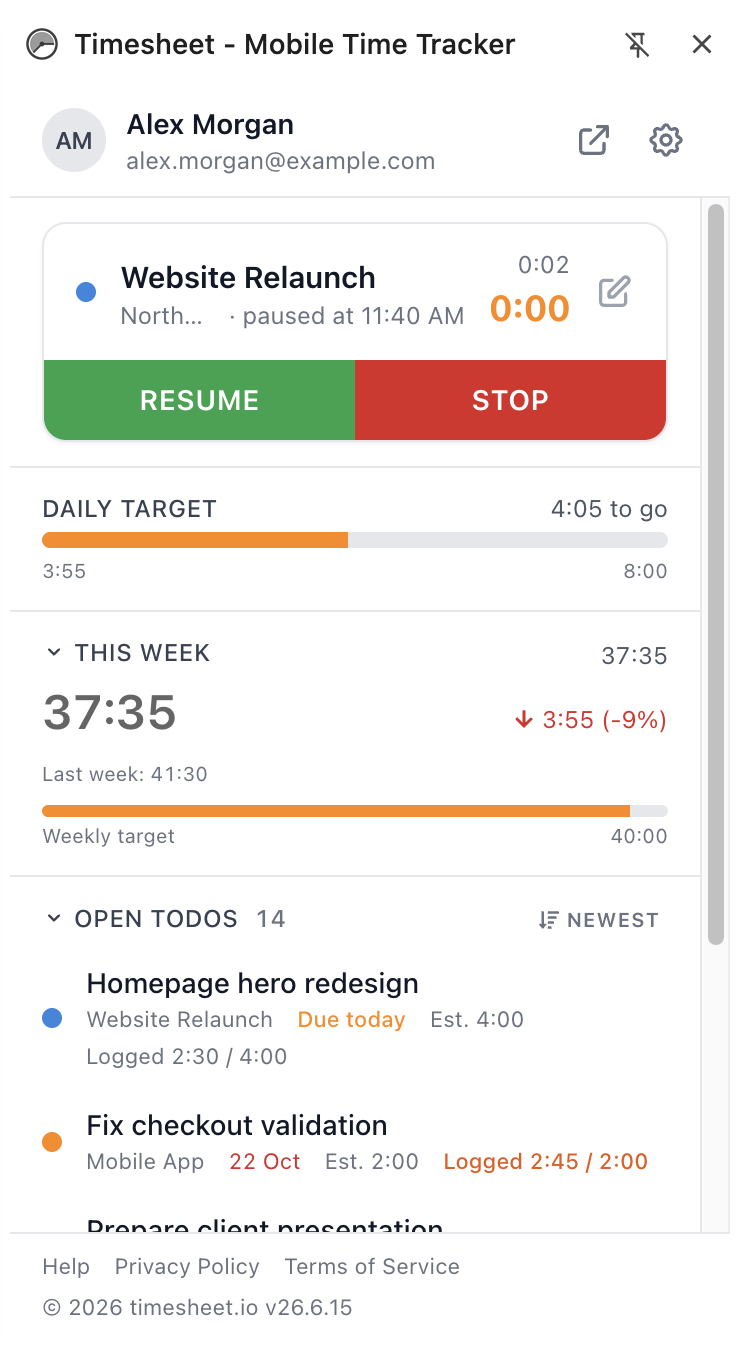
- Click Pause to start a break. The timer shows the break time in orange. Click Resume to continue.
- Click Stop to finish and save the task.
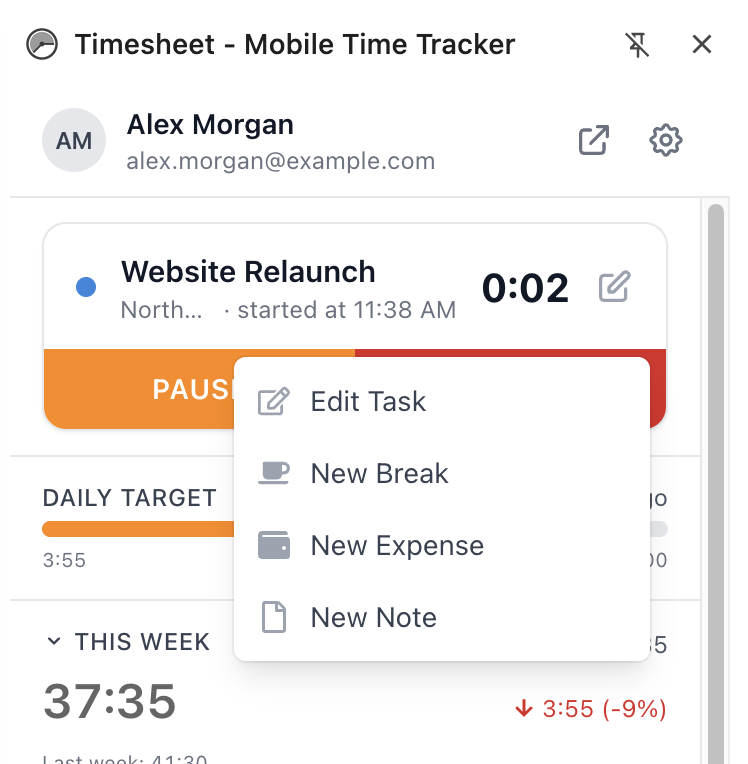
- Click the project row for more actions: Edit Task, New Break, New Expense, and New Note.
Edit the running task
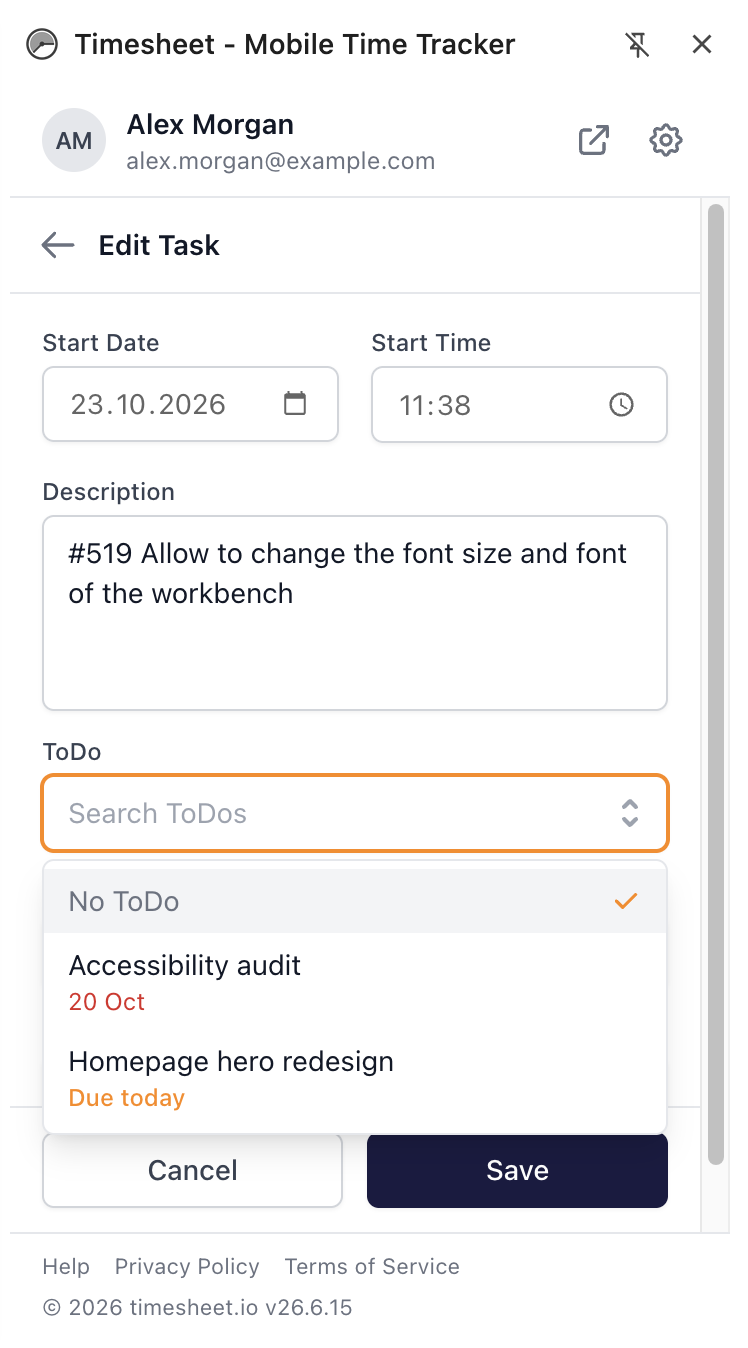
- Click the project row, then Edit Task.
- Change the start date and time, the description, the ToDo, the type, tags, location or rate. For mileage and calls, more fields appear.
- Click Save.
The ToDo field lists the open ToDos of the task's project. Type to search, or choose No ToDo to remove the link.
Your day
Below the timer, the side panel sums up your day.
What you see:
- Daily target: the time you logged today and how much is left, when your active contract has daily hours for today. Otherwise, Today shows the time you logged today.
- This week: the week so far compared with last week, and your weekly target if your contract has one.
- Open ToDos: five of your open ToDos at a time, with project, due date, estimate and logged time.
How to use it:
- Sort the ToDos by Newest, Due date, or Name.
- Click Start on a ToDo to track time on it. The buttons appear while no timer runs.
- Click Show more for the next five, or All ToDos to open your ToDos in the web app.
Timer buttons in other web apps
The extension can add a timer button to the pages of the tools you work in, such as GitHub, GitLab, Jira, Trello, Asana, Linear and Notion. The button reads the issue or ticket from the page, so you don't have to type a description.
Turn on your tools
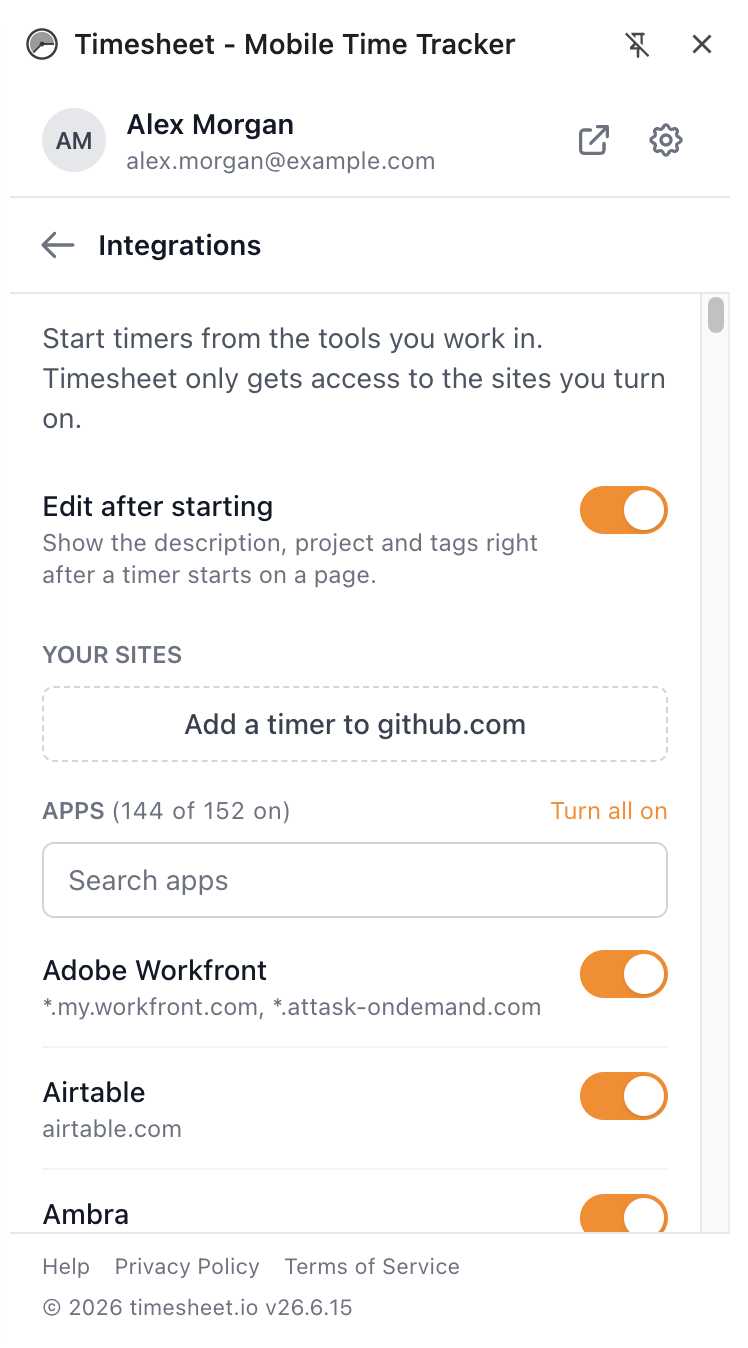
- Click the gear icon, then Integrations.
- Turn on the apps you use. Chrome asks for access to the app's website. Click Allow.
- Reload tabs of that app that were already open.
Timesheet only gets access to the sites you turn on. Turn all on turns on every app at once.
For a self-hosted tool, such as GitLab or Jira on your own server, click Own domain below the app, enter your domain (for example gitlab.example.com), and click Add. Apps that only exist as self-hosted versions show Self-hosted: add your domain to use it.
Start a timer from a page

- Open an issue, ticket or card, for example a GitHub issue.
- Click Start timer next to the title.
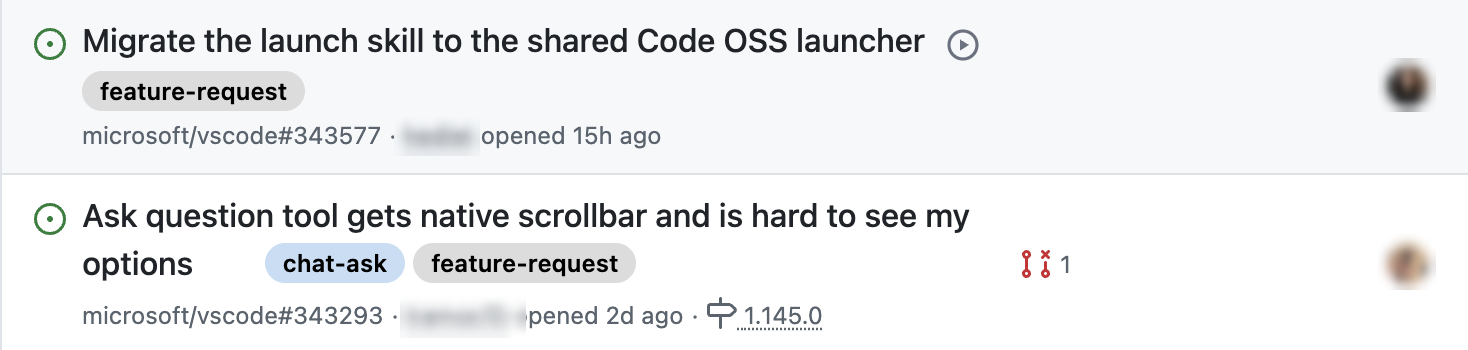
The timer starts with the page's title as the description, for example #519 Allow to change the font size and font of the workbench. For the project, the extension uses the project you chose for this kind of page before, a project with the same name as the page's project (for example the GitHub repository), or the last project you used. Labels on the page become tags when your account has tags with the same names.
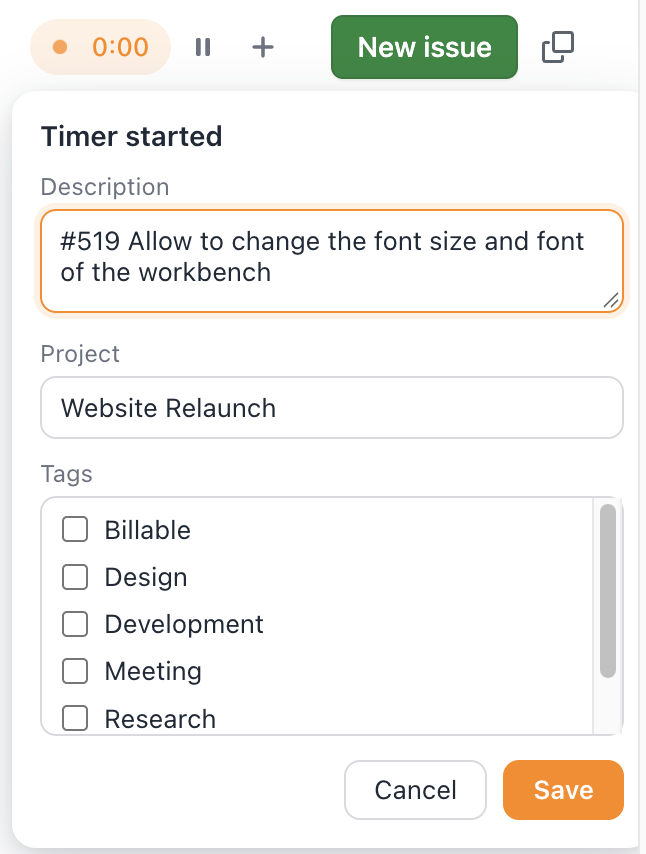
Right after the start, a small window shows the description, project and tags. Change them and click Save, or click Cancel to keep them. To skip this window, turn off Edit after starting in Integrations.

While the timer runs, the button shows the time. Click it to stop the timer, or use the pause button next to it.
To log time without the timer, click + next to the button, enter a duration such as 1h 30m or 1:30, and click Add.
On lists, such as GitHub's issue and pull request lists and project boards, the button appears when you move the mouse over an item.
Add a timer to any website
For a website that is not in the list of apps:
- Right-click the page and choose Add a Timesheet timer to this site…, or click Add a timer to followed by the site's name in Integrations.
- Click where the button should go, for example a heading.
- Click the text that names the task, or click Use the page title.
- Check the name and the button position, and click Save.
If Chrome opens a window that asks for access to the site, click Allow so the button also appears on your next visits.
Shortcut and right-click menu
- Press Alt+Shift+T (Option+Shift+T on a Mac) to start or stop the timer for the page you are on. To change the shortcut, open
chrome://extensions/shortcuts. - Right-click a page and choose Start timer for this page. To use text from the page as the description, select it first and choose Start timer for followed by the selected text.
Settings
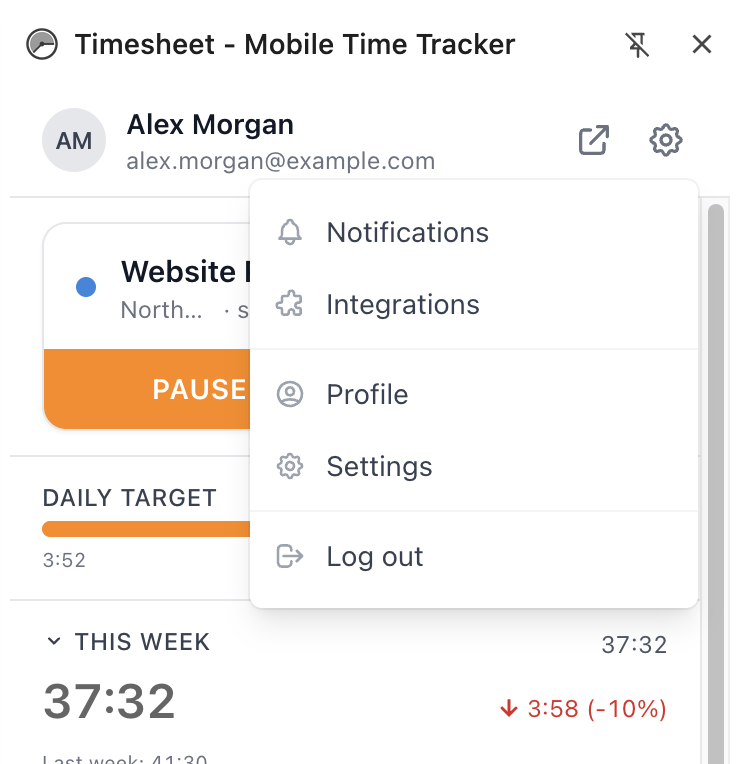
Click the gear icon in the header:
- Notifications: reminders based on your contract (breaks, daily target, weekly target), a reminder to discard idle time when you step away while tracking, and today's hours on the toolbar icon.
- Integrations: the apps that show a timer button. See Timer buttons in other web apps.
- Profile and Settings: open your profile and settings in the web app. The duration and time formats you set there also apply to the extension.
- Log out.
Troubleshooting
The timer button does not appear on a page.
- Check that the app is turned on in Integrations and that its access is allowed.
- Reload the page.
- The button appears on supported pages, for example a single issue or a list of issues, not on every page of an app.
The side panel does not open.
- Pin the extension and click its icon in the toolbar.
- Update Chrome. The side panel needs a recent version of Chrome.