Google Calendar
The Google Calendar integration keeps your Timesheet tasks and Google Calendar events in sync. Tracked time can appear as calendar events, calendar events can become tasks, or both, depending on the direction you choose.
The Google Calendar integration requires a Pro plan or above. See the Plans page for the full comparison.
Install and connect
In the web app, open Integrations, select Browse Marketplace, and install Google Calendar. Open the integration, select Connect, then sign in to your Google account and allow access.
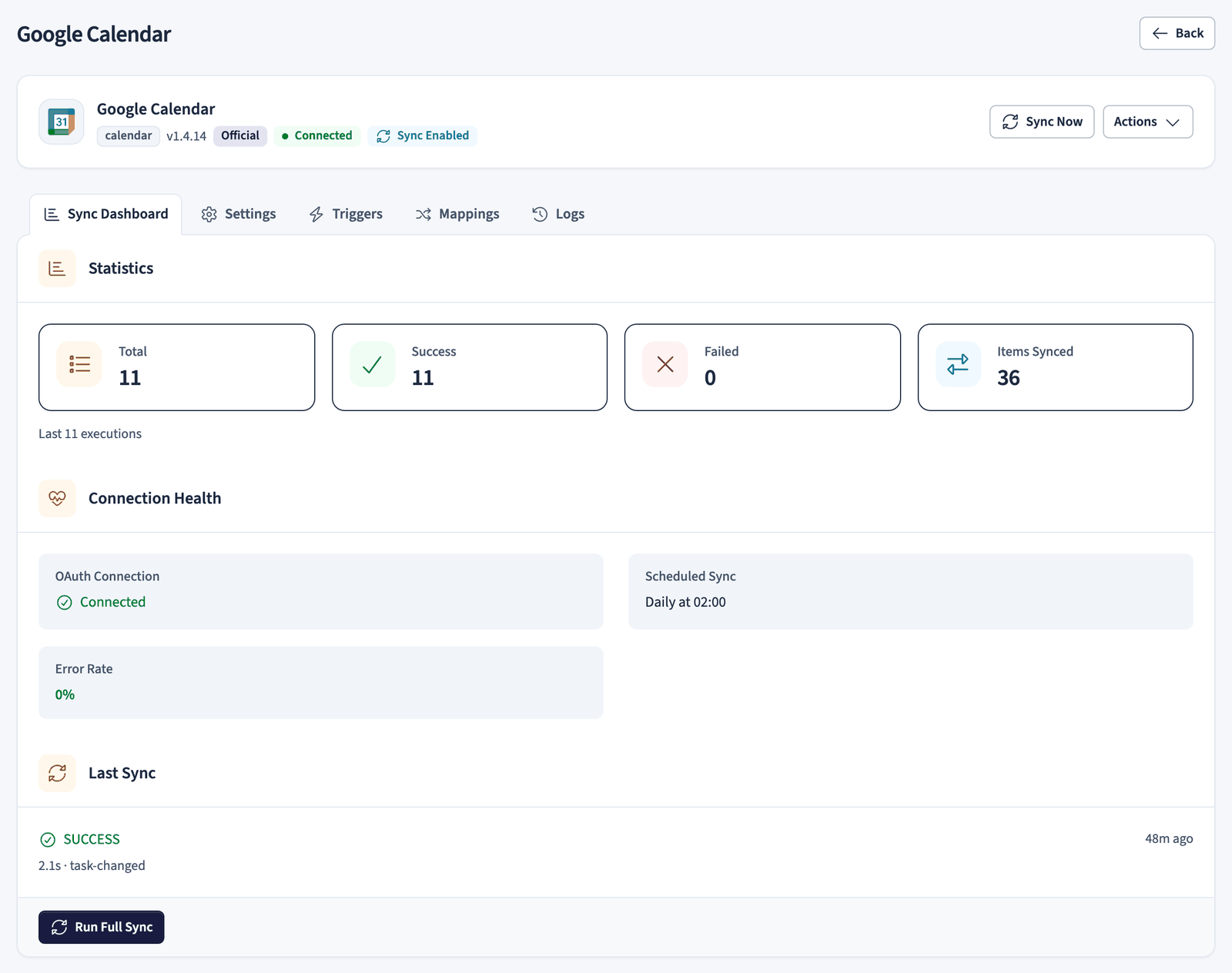
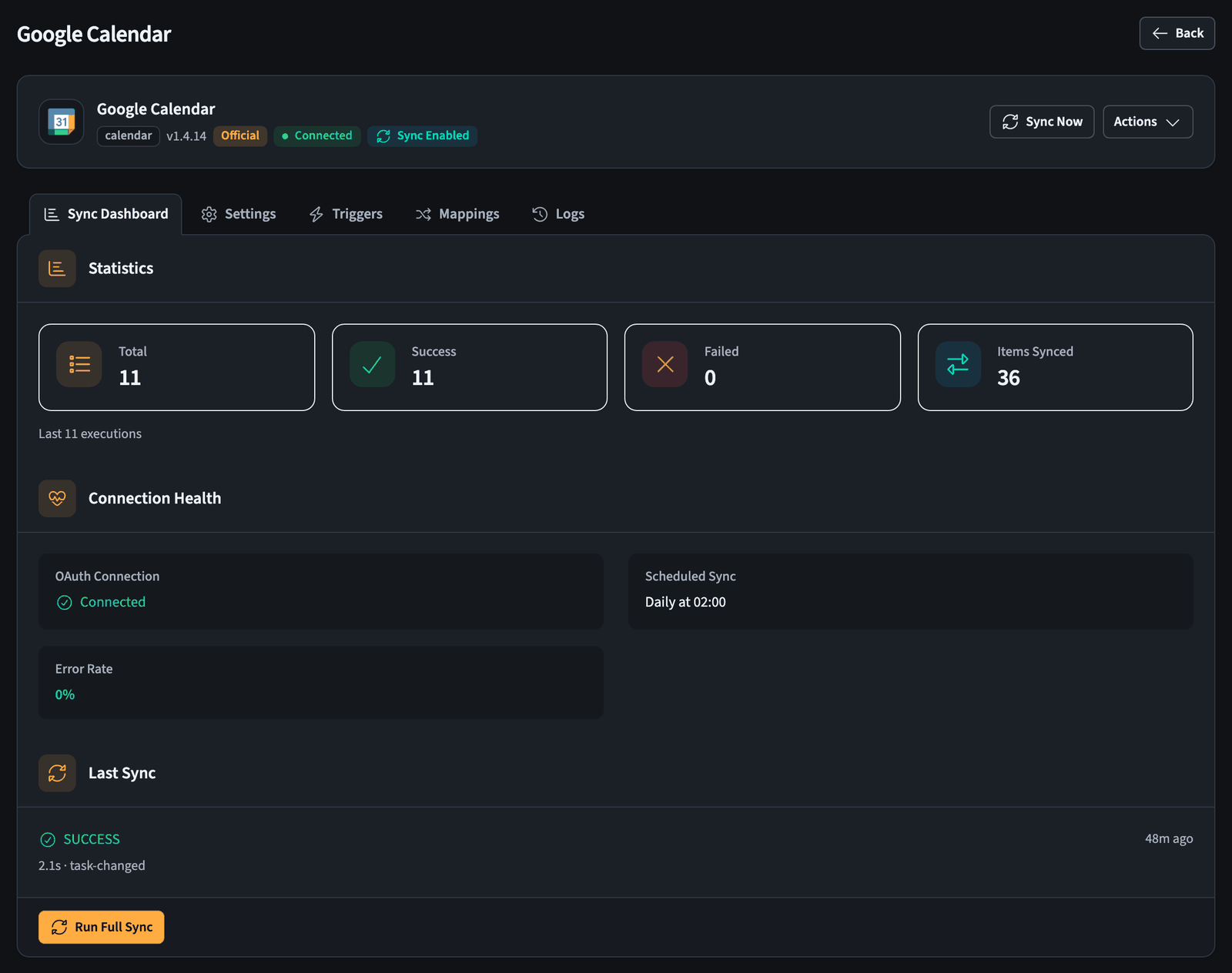
Once connected, the header shows Connected and Sync Enabled. From here you can run a sync at any time with Sync Now, or use the Actions menu to manage the integration. The integration is organized into five tabs: Sync Dashboard, Settings, Triggers, Mappings, and Logs.
Choose a sync direction
On the Settings tab, choose how data flows.
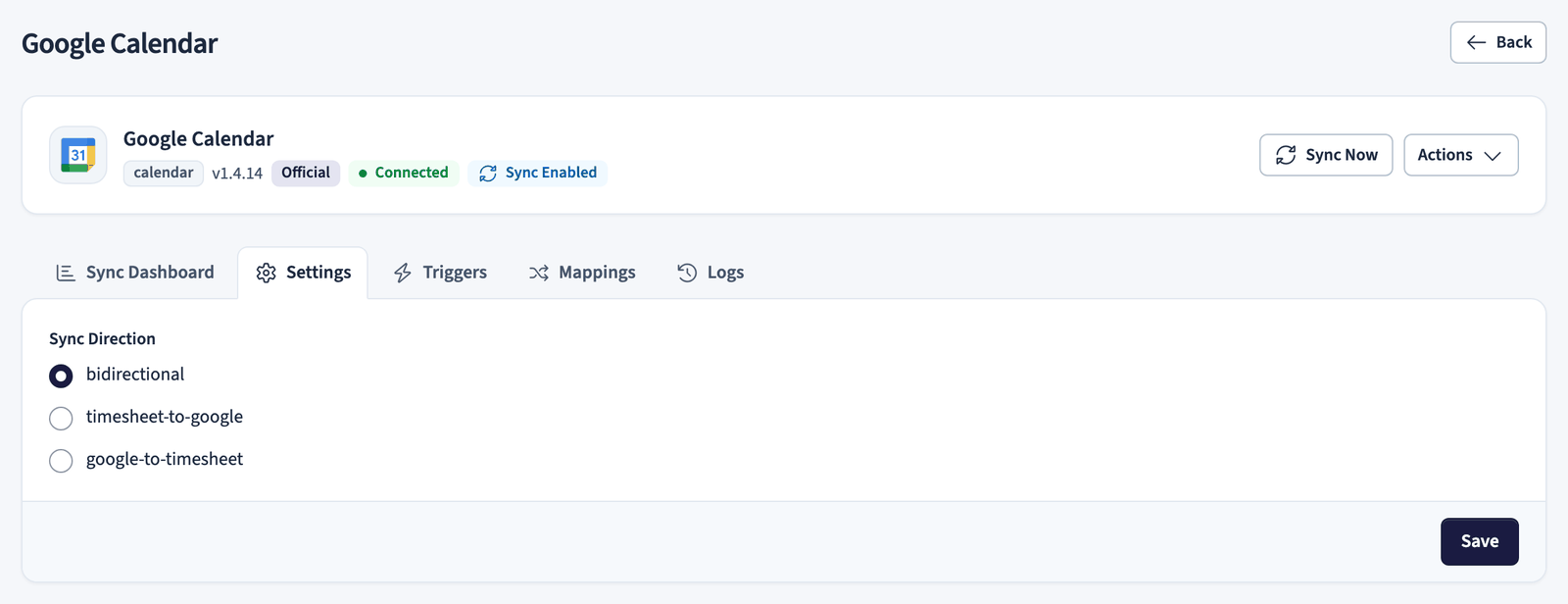
- bidirectional: changes sync both ways.
- timesheet-to-google: Timesheet tasks create and update Google Calendar events only.
- google-to-timesheet: Google Calendar events create and update Timesheet tasks only.
Select Save to apply.
What syncs
From Timesheet to Google Calendar
- Each finished task in a mapped project becomes an event in the mapped calendar. The event title is the project and client, and the task's description becomes the event description.
- Edits and deletions follow automatically. A running timer appears once you stop it.
- Edits from Timesheet keep the guests and reminders you added to the event in Google.
From Google Calendar to Timesheet
- Every event in a mapped calendar becomes a task in the mapped project, with the event title as the description, plus its start, end, and location.
- Recurring events become one task per occurrence. All-day events become tasks of a full day, and future events are imported too.
- When an event changes or is deleted in Google, the task follows.
- The first sync imports events that ended within the past 365 days.
With bidirectional sync, editing or deleting a task that came from Google also changes or deletes the event in Google Calendar.
When the same item changes on both sides, the newer change wins. Moving a task to another project does not move its event to the other calendar.
Map projects to calendars
On the Mappings tab, link each Timesheet project to a Google calendar. Only mapped projects sync. All calendars come from the Google account you connected, including calendars shared with it; two-way sync needs edit access to a shared calendar.
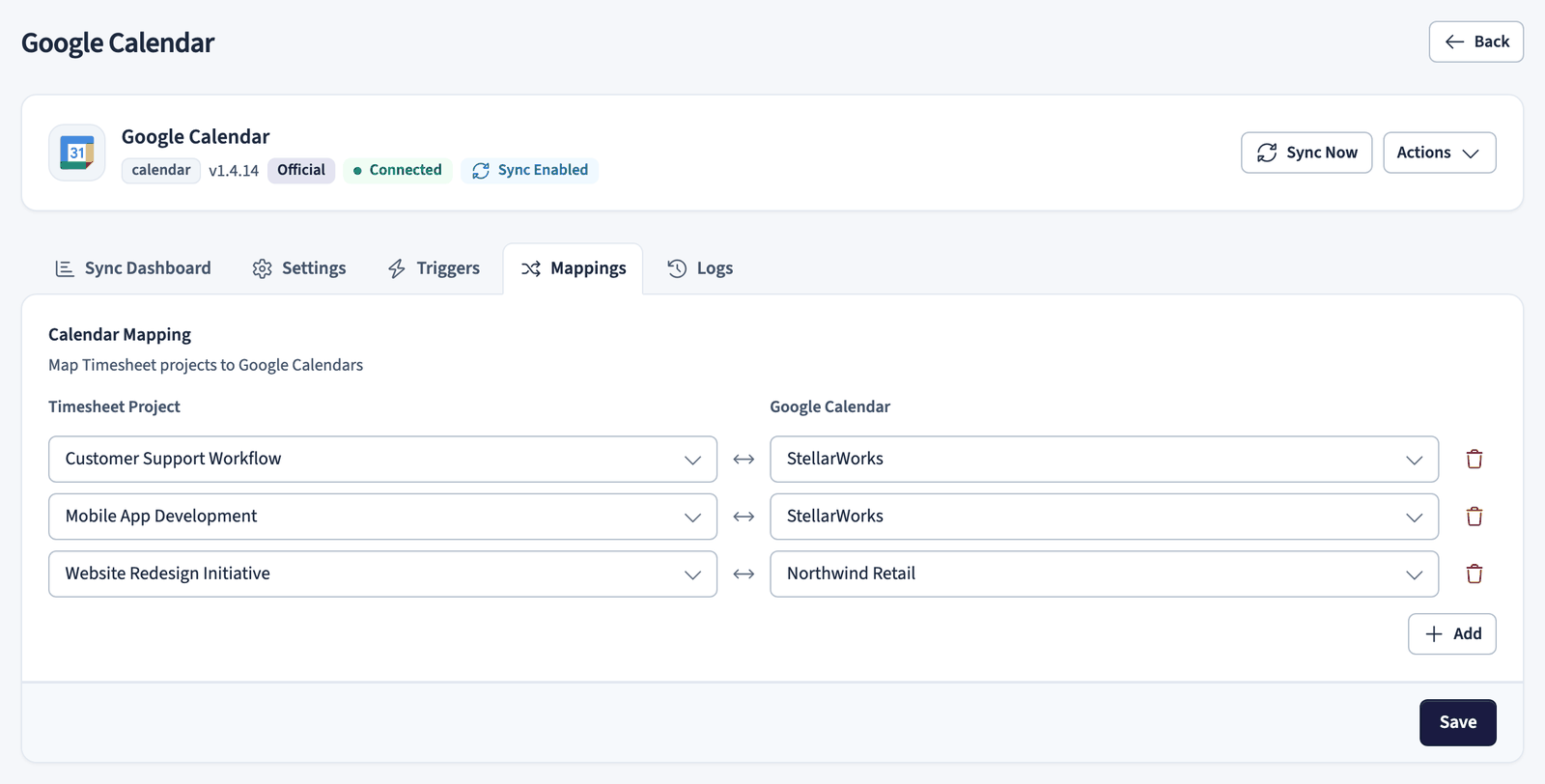
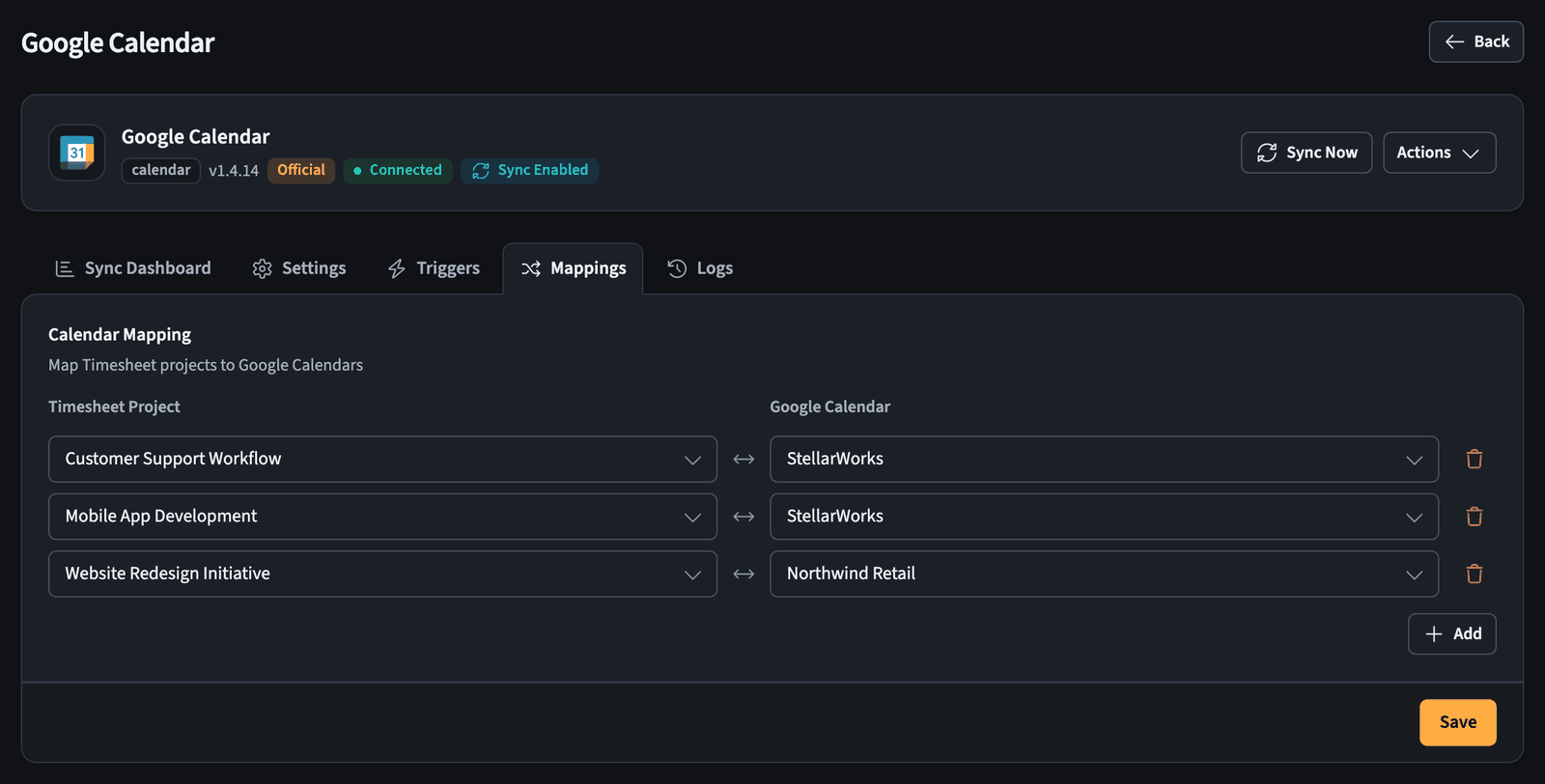
Select + Add to create a pair, choose the Timesheet project and the Google calendar, then Save. Use the trash icon to remove a pair.
When it syncs
The Triggers tab controls what starts a sync. You can turn Task Changed and Scheduled Full Sync on or off. Triggers marked Automatic always run.
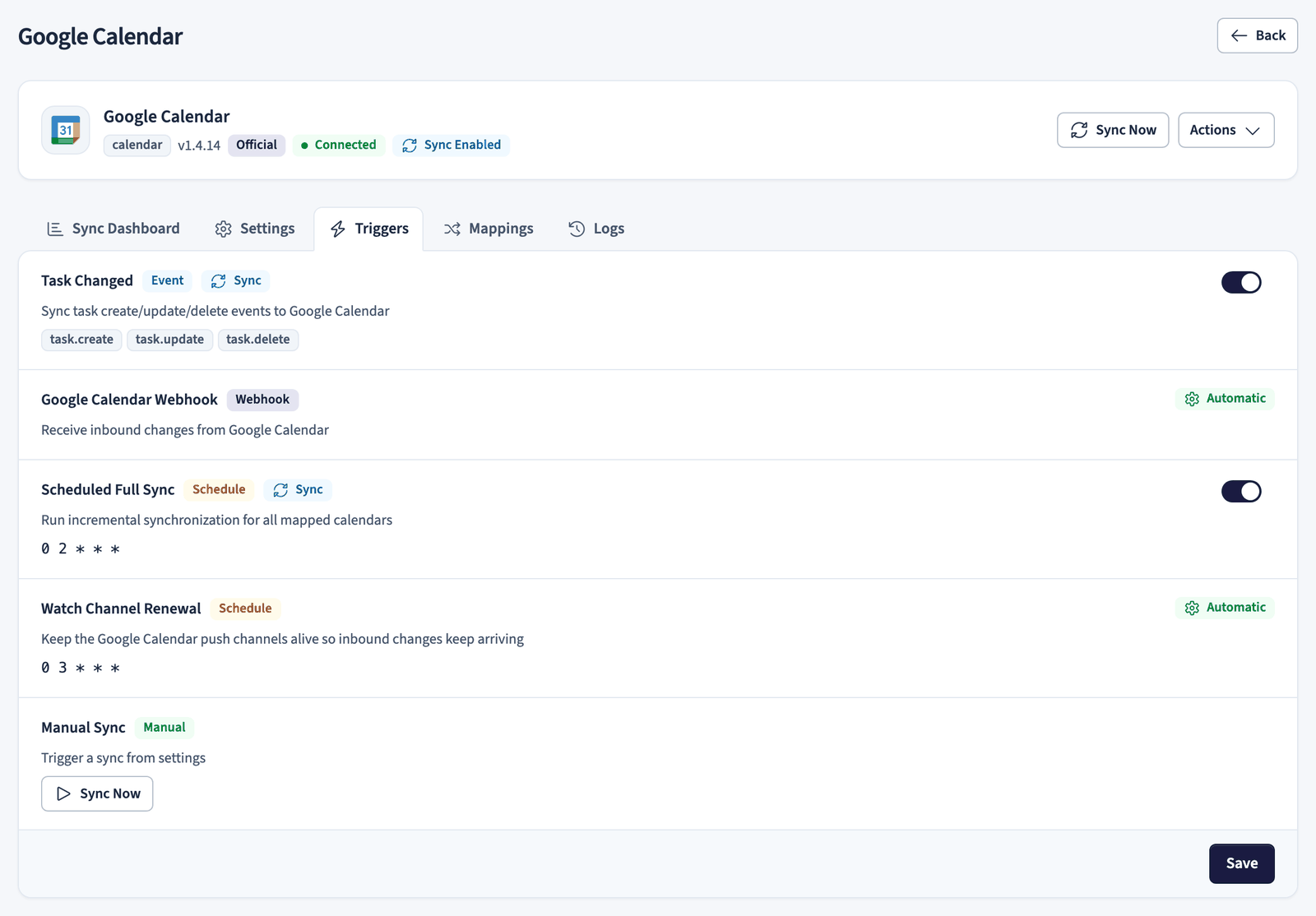
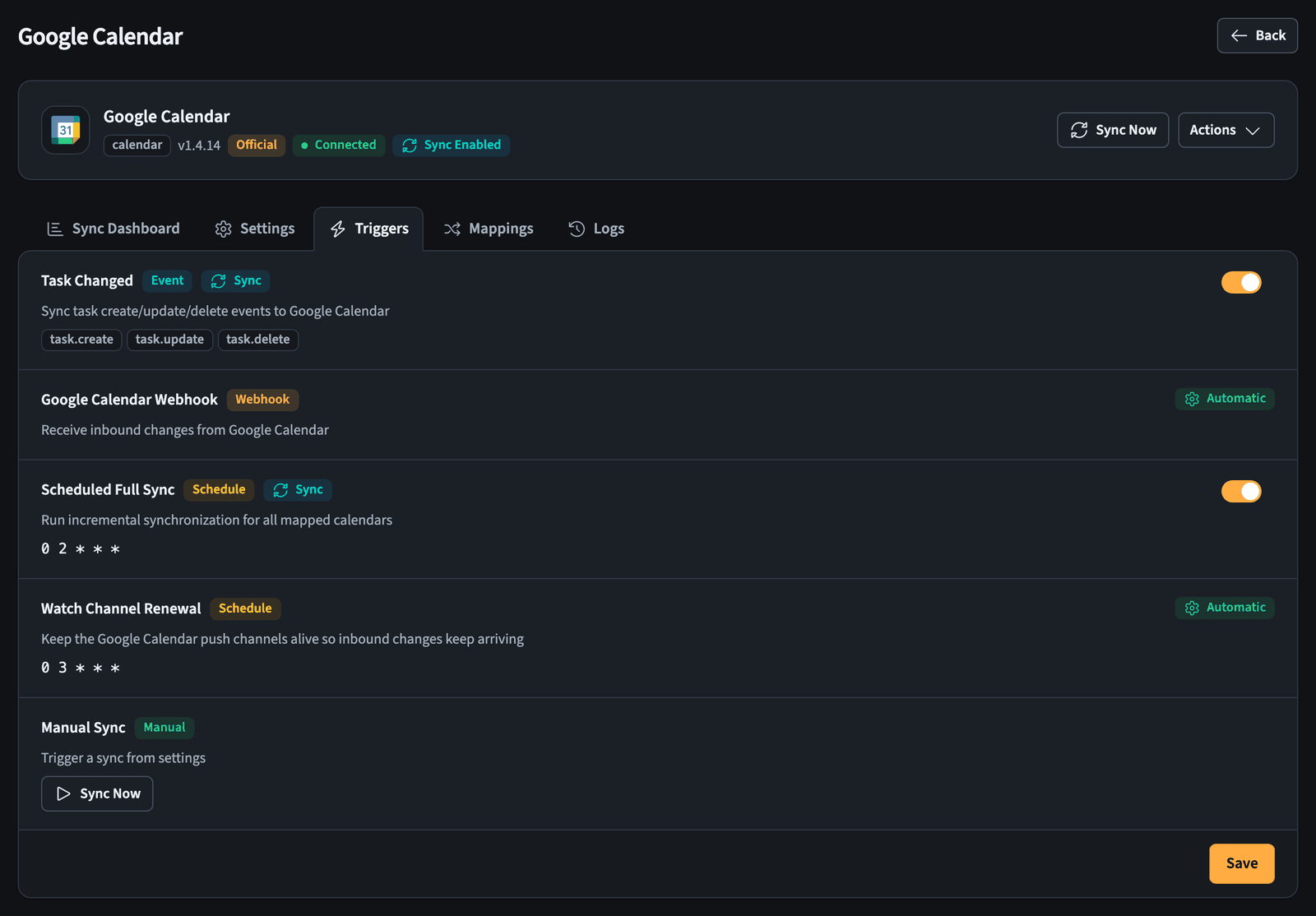
- Task Changed: syncs
task.create,task.update, andtask.deleteto Google Calendar as they happen. - Google Calendar Webhook: receives inbound changes from Google Calendar automatically.
- Scheduled Full Sync: runs daily at 02:00 UTC and sends any Timesheet changes that have not reached Google Calendar yet. It does not fetch changes from Google.
- Watch Channel Renewal: runs daily at 03:00 UTC and keeps the connection active that delivers changes from Google Calendar.
- Manual Sync: runs when you select Sync Now or Run Full Sync and fetches the changes from Google Calendar. Use it for the first import after mapping your calendars.
Monitor syncs
The Sync Dashboard shows the health of the integration: how many of the recent runs succeeded or failed, how many items synced, the connection state, the scheduled sync time, and the last sync result. Select Run Full Sync to fetch the changes from Google Calendar now.
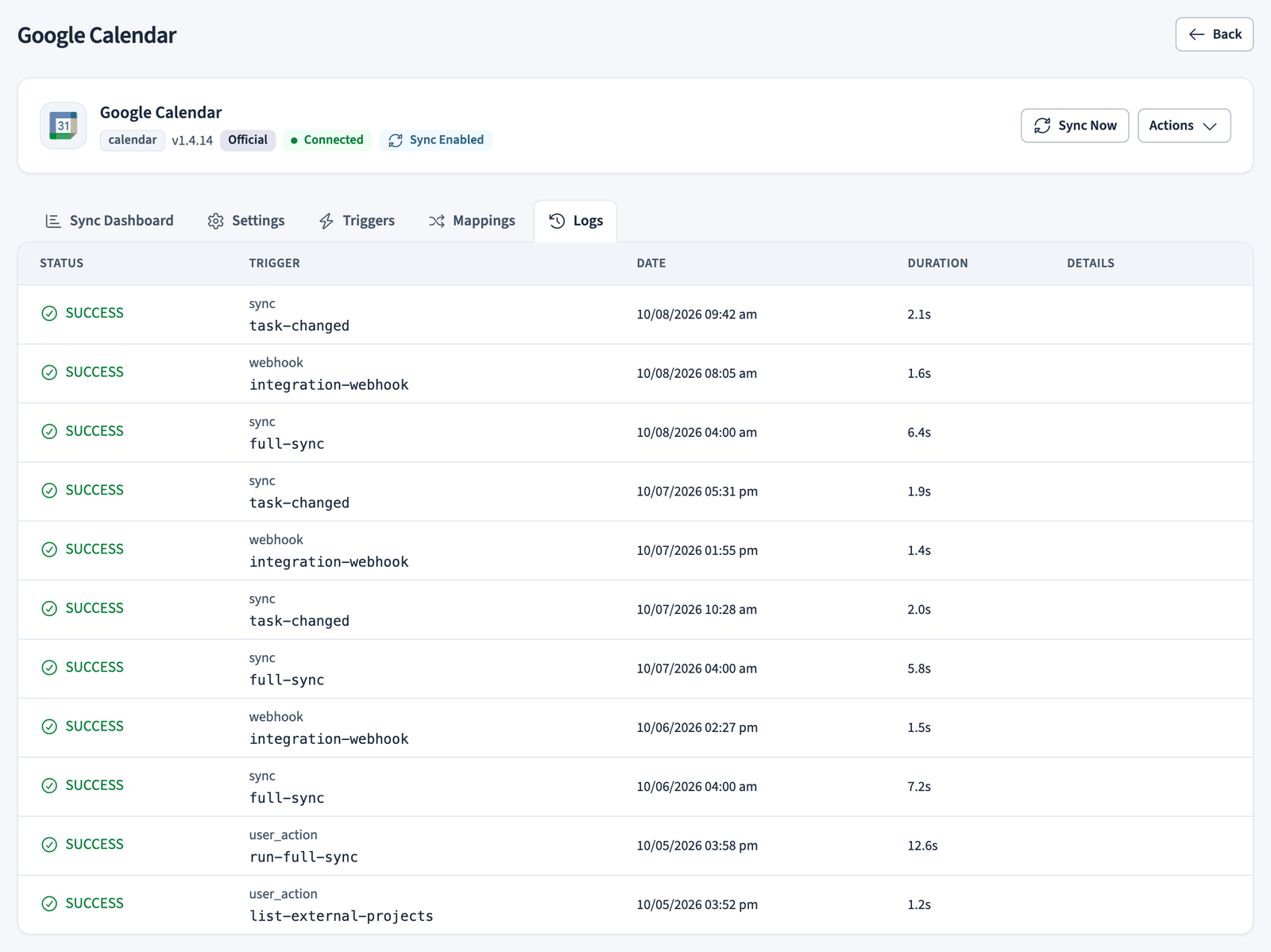
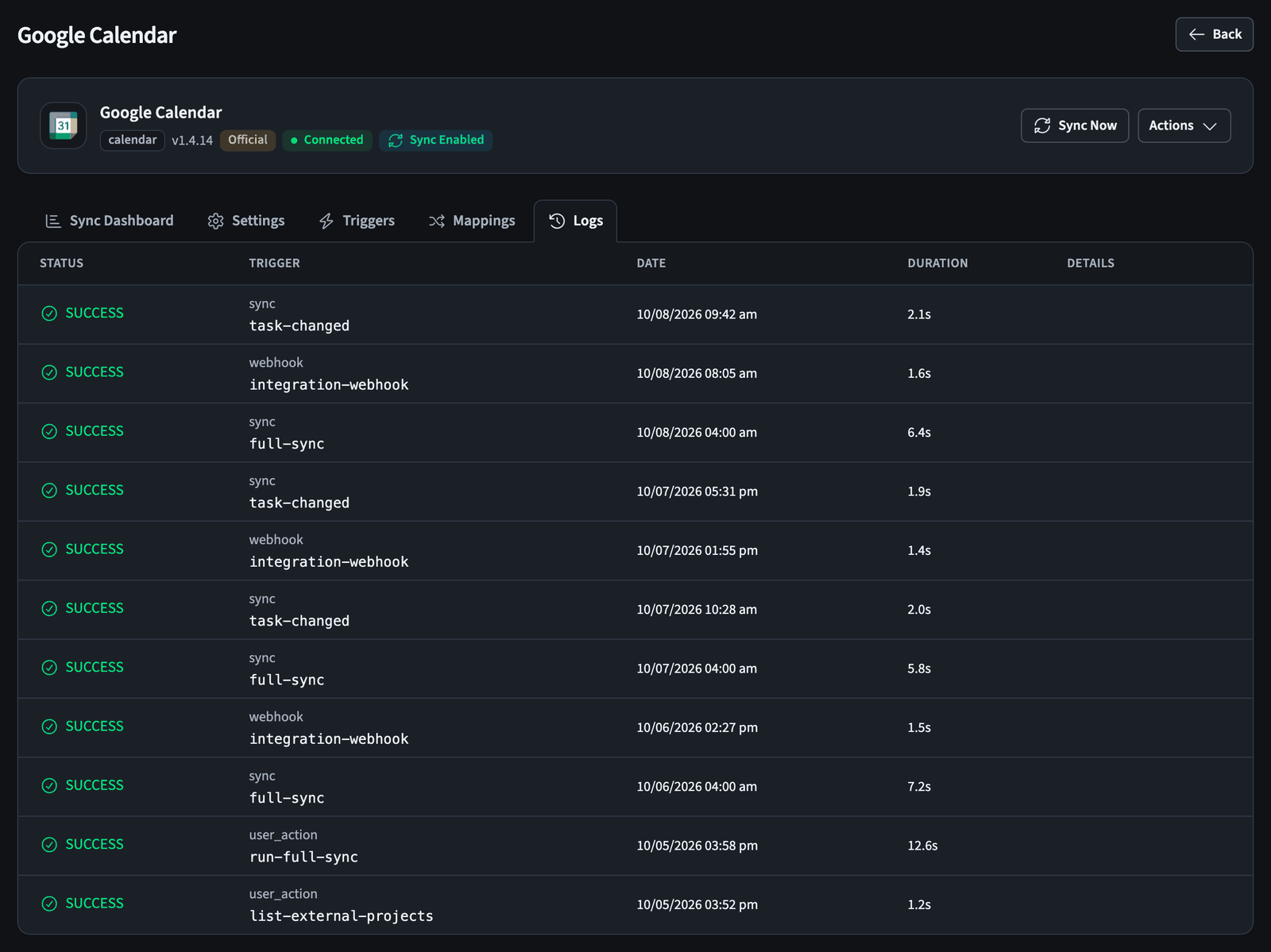
The Logs tab lists each run with its status, trigger, date, and duration, so you can see exactly what synced and when.
Remove the integration
To stop syncing for a while, open the Actions menu in the header and select Disconnect. To remove the integration, use the Uninstall Integration section on the integration page and select Uninstall. This removes the integration and its mappings. Events and tasks that already synced are not deleted.
See also
- Integrations: install integrations and manage API keys and webhooks.
- QuickBooks: sync tracked time to QuickBooks Online.
- Plans: compare what each plan includes.